.jpg)
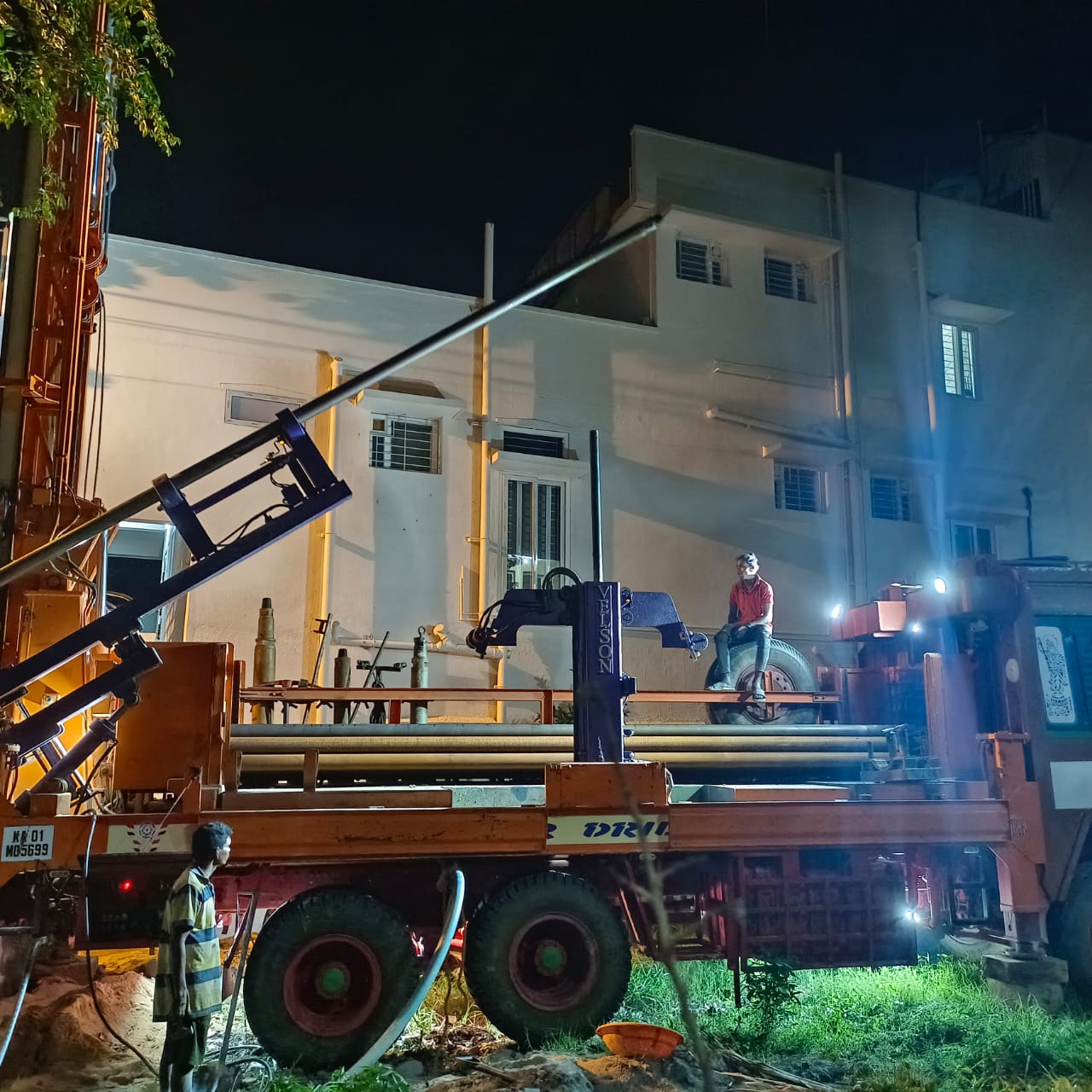
Borewell Installation Near Kundalahalli
Contact : +919066443111
Borewell Installation
Borewell installation is a crucial process for accessing underground water resources, particularly in regions where surface water is scarce. It involves drilling a deep well into the ground to extract groundwater, which can be used for various purposes such as domestic use, agriculture, and industrial operations. This guide outlines the key steps and considerations involved in borewell installation.
Pre-Installation Planning
Before beginning the borewell installation process, proper planning and research are essential to ensure efficiency and sustainability. Key steps include:
-
Survey and Assessment:
- A hydrogeological survey identifies potential groundwater sources.
- This is conducted using advanced techniques such as electrical resistivity tests and satellite mapping.
-
Permissions and Legal Compliance:
- Obtain necessary permits from local authorities, as regulations govern groundwater usage in many regions.
-
Selecting the Site:
- Choose a site with sufficient space for drilling rigs and easy access for water extraction.
- Ensure the location is not near septic tanks, drains, or polluted areas to maintain water quality.
The Installation Process
Once planning is complete, the installation process begins:
-
Drilling:
- A borewell drilling rig is used to create a hole in the ground. The depth depends on the water table and geological conditions, ranging from 100 to 1,500 feet or more.
- Types of drilling include rotary, percussion, and down-the-hole (DTH) methods.
-
Casing Installation:
- A casing pipe, typically made of PVC or steel, is inserted into the borehole to prevent soil and debris from collapsing into the well.
- This pipe also helps maintain the borewell’s structural integrity.
-
Grouting:
- Grouting material, such as cement, is applied around the casing to seal it and prevent contamination from surface water or nearby pollutants.
-
Pump Installation:
- A submersible pump is installed at the appropriate depth to extract water efficiently.
- Pump selection depends on factors like depth, water yield, and intended usage.
-
Water Yield Testing:
- A yield test is conducted to measure the flow rate of water from the borewell.
- This ensures the borewell meets the required water demand.
Post-Installation Considerations
Proper maintenance and regular checks ensure the borewell functions effectively:
-
Water Quality Testing:
- Periodic testing ensures the water is safe for use. Contaminated water should be treated with appropriate filtration systems.
-
Flushing and Cleaning:
- Regular cleaning prevents blockages caused by silt and debris, maintaining the borewell’s efficiency.
-
Pump Maintenance:
- Routine inspection of the submersible pump ensures it operates without interruptions.
Cost and Sustainability
The cost of borewell installation depends on factors like depth, drilling method, and materials used. Sustainable practices, such as borewell recharging and rainwater harvesting, can enhance groundwater levels and prolong the borewell's lifespan.
Borewell installation is a long-term investment requiring careful planning, quality materials, and professional expertise. By following these steps and ensuring regular maintenance, a borewell can provide a reliable source of water for years to come.